

Affiliate disclosure: As an Amazon Associate, Hot Tub Gurus earns from qualifying purchases. If you buy through links on this page, we may earn a commission — at no extra cost to you.
Disclosure: This article may contain affiliate links to products we recommend. If you buy through them, we may earn a small commission at no extra cost to you. Learn more in our affiliate disclosure.
When to Change Your Inflatable Hot Tub Water (and Where to Legally Put 300 Gallons)
The first water change is the moment most inflatable hot tub owners realize their backyard setup has an industrial-waste problem. One Saturday you lift the cover, notice the water has a certain… film to it, and wonder: “Is it time?” Then, once you decide yes, a second question hits you: “Where am I supposed to put 300 gallons of this?”
This guide answers both questions — the when (the signs your water is chemically spent, not just the calendar) and the where (the practical, renter-friendly logistics of disposing of 200–300 gallons of treated water without breaking a rule or killing your lawn). It’s the inflatable-owner’s angle: smaller bodies of water, tighter budgets, and a setup that sits on a patio or a rental lawn where “just run a hose to the curb” can get you fined.
One distinction up front: this post covers routine water changes — the quarterly-or-so refresh that keeps chemistry manageable. If you’re shutting the tub down for the season entirely, see our inflatable hot tub winter guide instead. Different job, different checklist.
1. The Signs Your Water Is Spent (Calendar-Independent)
Calendars are averages. Your water tells you the truth faster. Watch for these four signs that your water chemistry has gone past the point of fixing:
Sanitizer won’t hold
This is the big one. If you dose chlorine or bromine per your normal routine and it reads near zero by the next day — consistently, not just once — your water has developed “sanitizer demand.” Dissolved organics and accumulated byproducts are consuming the sanitizer faster than you can add it. More dosing doesn’t fix it; it just raises your chemical bill while the water stays marginal.
Persistent cloudiness
A tub that’s cloudy the morning after a soak is normal. A tub that’s cloudy no matter what you do — clarifier, shock, filter cleaning — is telling you the dissolved solids load is too high for filtration to clear. At this point you’re polishing a worn-out medium rather than cleaning it.
Odor that won’t shock out
A properly sanitized tub should smell like almost nothing. A persistent “chemical soup” or musty odor — especially one that survives a proper shock treatment — means the water is carrying a load of combined chloramines and organics that no longer respond to normal oxidation.
The “chemical soup” feel
Experienced owners describe it as a sliminess, a foaminess that returns within hours of skimming, or water that feels “heavy.” When foaming is constant rather than occasional, the total dissolved solids (TDS) have likely climbed past the practical limit. Note the caveat: foam can have other causes — check our hot tub pH troubleshooting guide — but foam plus any of the signs above means the water’s done.
If two or more of these show up together, stop chasing the chemistry. You’re past the fixable window. Drain it.
2. The 3–4 Month Rule of Thumb — and Why It Exists
The general industry guideline is a full water change every 3–4 months (engineerfix.com’s drain-and-refill guide uses this as its baseline). The reason is dissolved solids: every bather leaves behind sweat, oils, sunscreen, and cosmetics; every chemical dose leaves behind its own residue. You can’t filter these out — they accumulate until the water itself becomes the problem.
Inflatables make this arithmetic a little harsher than hard-shell owners face. A typical inflatable holds roughly 200–300 gallons depending on the model (model listings commonly cite ranges around 177–245 gallons for popular sizes) — less dilution per bather than a 400-gallon hard shell, so the same two-person soak pushes an inflatable’s chemistry further. The 3–4 month rule applies; if anything, inflatable owners hit the “spent” wall a touch sooner.
3. Adjust by Usage: Heavy vs. Light Soaking
The 3–4 month figure assumes average use. Adjust it honestly against how you actually soak:
| Usage pattern | Water-change interval |
|---|---|
| Heavy — daily or near-daily soaks, 3+ bathers, kids | Every 6–8 weeks |
| Average — a few soaks per week, 1–2 bathers | Every 3–4 months |
| Light — occasional soaks, careful pre-rinse, light chemical load | Up to 4 months, and stretch only if the water passes the signs test in section 1 |
The heavy-use interval (6–8 weeks) comes from hottubbro.com’s usage guidance; the conservative floor you’ll see cited is as frequent as every 30–60 days (rossihottubs) — treat that as the aggressive end of the range, not the norm. And “light use” isn’t an excuse to ignore the signs: if your sanitizer won’t hold at week ten, the calendar doesn’t get a vote. Keep your test strips current and let the water decide.
4. Before You Drain: Purge the Lines for Biofilm
Biofilm — the slimy bacterial layer that colonizes the inside of your plumbing — survives water changes. Drain a tub, refill it with pristine water, and the biofilm left in the jets and internal lines re-seeds the fresh water within days. It’s a leading cause of “I just changed the water and it’s cloudy again.”
The fix is a plumbing line-purge product: a cleaner you add to the old water, circulate with the pump running, then drain along with the water. The purge step loosens biofilm so it flushes out with the drain instead of re-contaminating your refill (engineerfix, hottubwarehouse). Think of the category — line-purge/plumbing-cleaner — as a non-negotiable part of the routine, not an upsell.
When to bother: always, honestly — but especially if you’re changing water because of persistent cloudiness or odor, or if it’s been more than 4 months. If your water is clean and you’re just doing a scheduled change, the purge is still cheap insurance against the re-seeding problem.
hot tub line-purge / plumbing cleaner/p>
5. How to Drain an Inflatable: Three Methods
You don’t need a plumber. You need a plan for getting roughly 200–300 gallons out of a vinyl tub efficiently.
Method 1: The built-in drain valve + garden hose
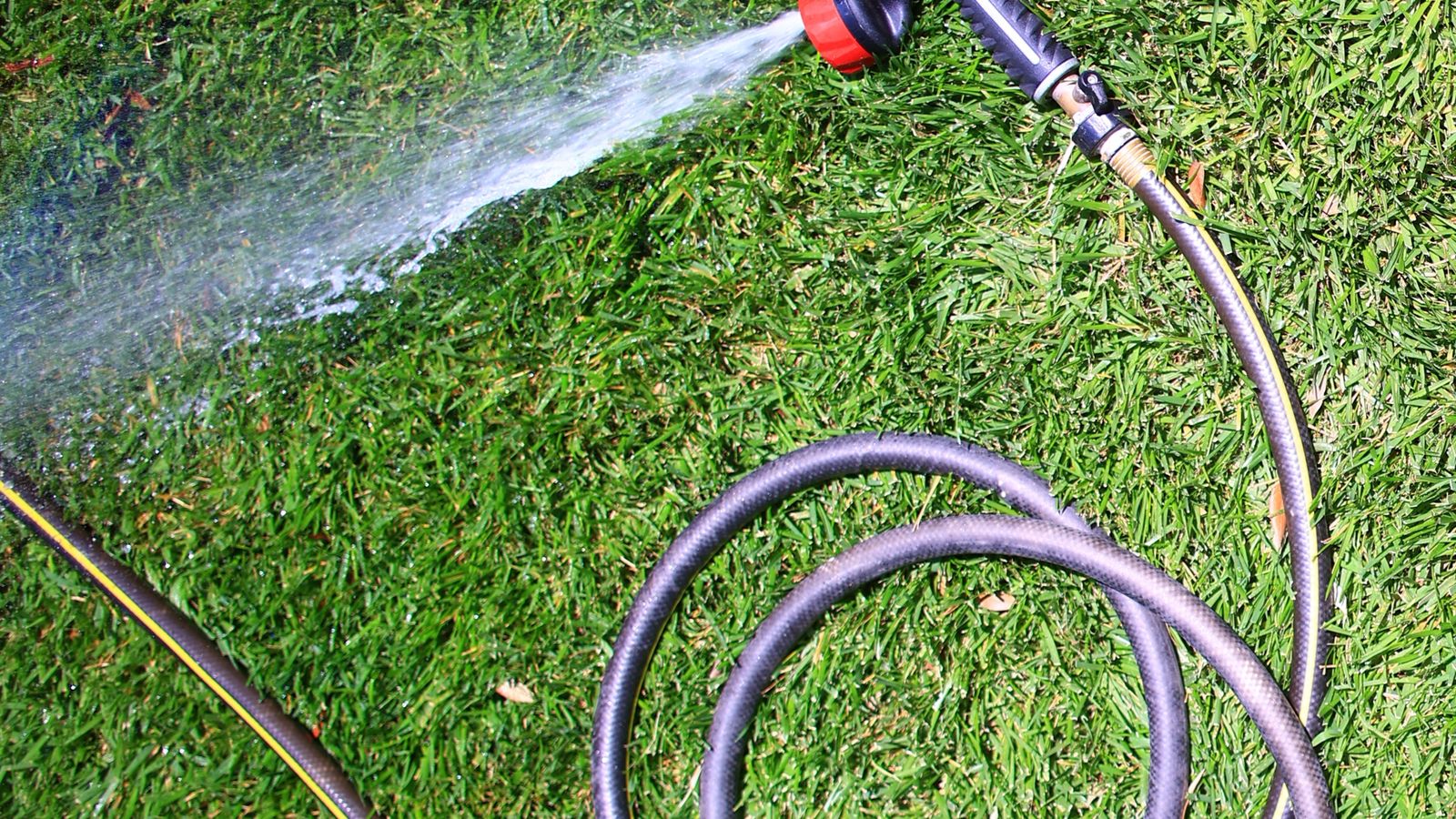
Nearly every inflatable has a drain valve near the base. Connect a garden hose, run it to your drain destination (section 6), and open the valve. It’s the zero-cost option — but it’s slow. Gravity draining through a valve can take several hours for a full tub, and the last inch or two pools in the footwell where the valve can’t reach.
Method 2: A submersible pump (fastest)
A small submersible drain pump drops into the tub and empties it through a hose in under an hour for most inflatables. If you plan to own the tub for years, this is the single best purchase in the water-change toolkit — it’s the difference between a 45-minute job and an all-afternoon one.
[AFFILIATE LINK: submersible drain pump]
Method 3: Wet/dry vac for the footwell
Whichever method you use for the bulk, finish with a wet/dry shop vac on the footwell and the creases around the seats. That last standing inch is where debris, sand, and chemical residue concentrate — leaving it means your “fresh fill” starts partially dirty.
[AFFILIATE LINK: wet/dry vacuum]
Practical tips for all three: purge the lines before you start draining; kill power to the heater once the water level drops below the intake; and wipe the interior with a clean cloth before refilling. Don’t forget to rinse the filter cartridge — or replace it if it’s due.
6. Where the Water Goes: The Honest Options
This is the section nobody’s page handles well for inflatable owners, so here’s the real map of your choices.
Option A: Sanitary sewer (cleanout or utility sink)
The safest default. If your home has a sanitary sewer cleanout (usually a capped pipe near the foundation), you can run your drain hose into it. A basement or laundry-room utility sink works too — pump the water up and into it. This puts treated water exactly where wastewater belongs, and it’s the option most municipal guidance prefers.
Option B: Dispersed over your lawn — but only after prep
Hot tub water on lawns and flower beds is generally acceptable with conditions: let sanitizer dissipate for 24–48 hours before draining (leave the cover off, don’t add chemicals), and aim for a pH roughly between 6.5 and 8.5 to protect vegetation. Then disperse the water over a large area — don’t dump it in one spot, which saturates soil and stresses grass (engineerfix; swimuniversity).
The rule of thumb: if you wouldn’t pour it straight from a heavily chlorinated tub, don’t pour it on the plants the night you shocked it. Time plus dilution is the whole game.
What to never do
- Never drain into a storm drain or onto the street. Storm drains typically lead directly to local waterways — untreated. This is the single most common water-change violation, and the one most likely to draw a fine (swimuniversity).
- Never flood a septic drain field. A sudden 200–300 gallon load can overwhelm the field; if you’re on septic, the sewer-cleanout option doesn’t exist — use dispersed lawn watering well away from the drain field, or contact a local service. (More on septic systems in the gotchas below.)
- Never drain near your foundation. Repeatedly dumping hundreds of gallons against a foundation invites moisture problems that dwarf your water bill.
7. The Gotchas: HOAs, Septic, Decks, and Plants
Four edge cases that bite inflatable owners specifically:
HOA and municipal rules
Some cities require sewer disposal and prohibit lawn draining entirely; some HOAs have their own drainage rules. This is the ceiling of advice we can give: check your local ordinances and HOA rules before you drain. A five-minute search or call saves you a fine (hottubwarehouse).
Septic systems
If your house is on septic, you have no sanitary sewer cleanout — and you must not send tub water into the septic system or across the drain field. The sudden hydraulic load can disrupt the field’s function. Your workable options are dispersed lawn watering away from the drain field (after the 24–48h dechlorination window), or hauling/pumping it out. When in doubt, ask a local septic professional — this is one area where generic advice shouldn’t override a site-specific answer.
Treated-wood decks
Chlorinated water degrades wood over time. If your tub sits on a wooden deck, don’t drain across it — route the hose off the deck entirely, and even with dechlorinated water, avoid pooling on treated wood.
Plants and landscaping
To be precise: tub water is not universally safe for all plants. It’s generally fine only when dechlorinated (the 24–48h wait), pH-neutral (roughly 6.5–8.5), and dispersed. Saltwater-treated tubs and heavily shocked water are different cases — don’t gamble on prized landscaping. When your flower beds matter more than your drain hose, use the sewer option.
8. The Refill Reset: Balancing From Zero
A fresh fill is the easiest water you’ll ever balance — nothing is fighting you yet. But “easy” still has an order of operations:
- Test first, dose second. Fill, circulate for a few hours, then test before adding anything. You need a baseline.
- Alkalinity before pH. Total alkalinity buffers pH; get it in range first so your pH adjustments actually hold.
- pH, then sanitizer. Sanitize only after pH is in range — sanitizer efficiency depends on it.
- Shock on day one. A fresh fill benefits from an initial shock to establish a clean baseline.
We won’t re-teach water chemistry here — that’s what our guides are for. Start with the hot tub chemicals beginner’s guide, and use the chemical dosing calculator so you’re measuring by volume instead of guessing by capful. A fresh test kit or strips matters too — old strips give old answers.
[AFFILIATE LINK: hot tub test kit / test strips]
FAQ
Can I leave the water in all winter instead of changing it?
If you keep the tub running and heated through winter, yes — the normal water-change schedule continues, and you may use slightly fewer chemicals since cold air doesn’t degrade sanitizer as fast. If you’re shutting the tub down for winter, that’s not “leaving the water in” — that’s a full winterization, which is a different procedure. See our inflatable hot tub winter guide.
My water is a chemistry disaster. Should I drain mid-cycle instead of fixing it?
Usually yes. There’s a crossover point where the cost of chemicals to rescue the water exceeds the cost of fresh water — and for a 200–300 gallon inflatable, that crossover arrives fast. If you’ve shocked twice, balanced pH, cleaned the filter, and the water still fails the signs test in section 1, drain it, purge the lines, and refill. Don’t throw a third round of chemicals at spent water. For problems that recur right after a fresh fill, see our hot tub maintenance schedule — a repeat offender is a process problem, not a water problem.
How much does a water change cost?
Mostly your water bill. At roughly 200–300 gallons per fill, municipal water rates make the fill itself cheap in most areas — typically a few dollars. The real costs are time (draining and refilling takes an afternoon) and the starter chemicals to rebalance. Compared to months of extra chemicals fighting spent water, a change is almost always the cheaper move.
Do I really need to purge the lines every time?
For routine scheduled changes on clean water, it’s cheap insurance. For any change driven by cloudiness, odor, or sanitizer problems — absolutely. Biofilm is the leading cause of “the new water went bad immediately.”
The Bottom Line
The water-change rhythm for an inflatable hot tub is simple once you internalize it: watch the signs, not the calendar — sanitizer that won’t hold, cloudiness that won’t clear, odor that won’t shock out. Purge the lines, drain smart (a submersible pump pays for itself), put the water somewhere legal (sewer first, dechlorinated lawn second, storm drains never), and refill from a clean zero. Do it on schedule — every 3–4 months for average use, every 6–8 weeks if you soak hard — and you’ll spend less on chemicals, soak in better water, and never again stand over 300 gallons wondering where it goes.

10 Comments
Pingback: Draining an Inflatable Hot Tub: Hose, Pump & Where the Water May Go
Pingback: Green Hot Tub Water? The Algae Recovery Sequence, Step by Step
Pingback: Deep-Cleaning an Inflatable Hot Tub at Water Change: Shell, Jets & Lines
Pingback: Inflatable Hot Tub Cloudy Water: Causes and How to Fix It
Pingback: Inflatable Hot Tub Foamy Water: Causes and How to Fix It
Pingback: Inflatable Hot Tub for a Holiday Let: Guest Rules & Cleaning
Pingback: Filling a Hot Tub Without an Outdoor Tap: Hoses & Adapters
Pingback: Inflatable Hot Tub Garden Party: Planning, Guests & Aftercare
Pingback: Hot Tub Chemicals for Beginners: What to Buy & Skip
Pingback: Inflatable Hot Tub Hard Water: Calcium Scale and White Flakes Explained