

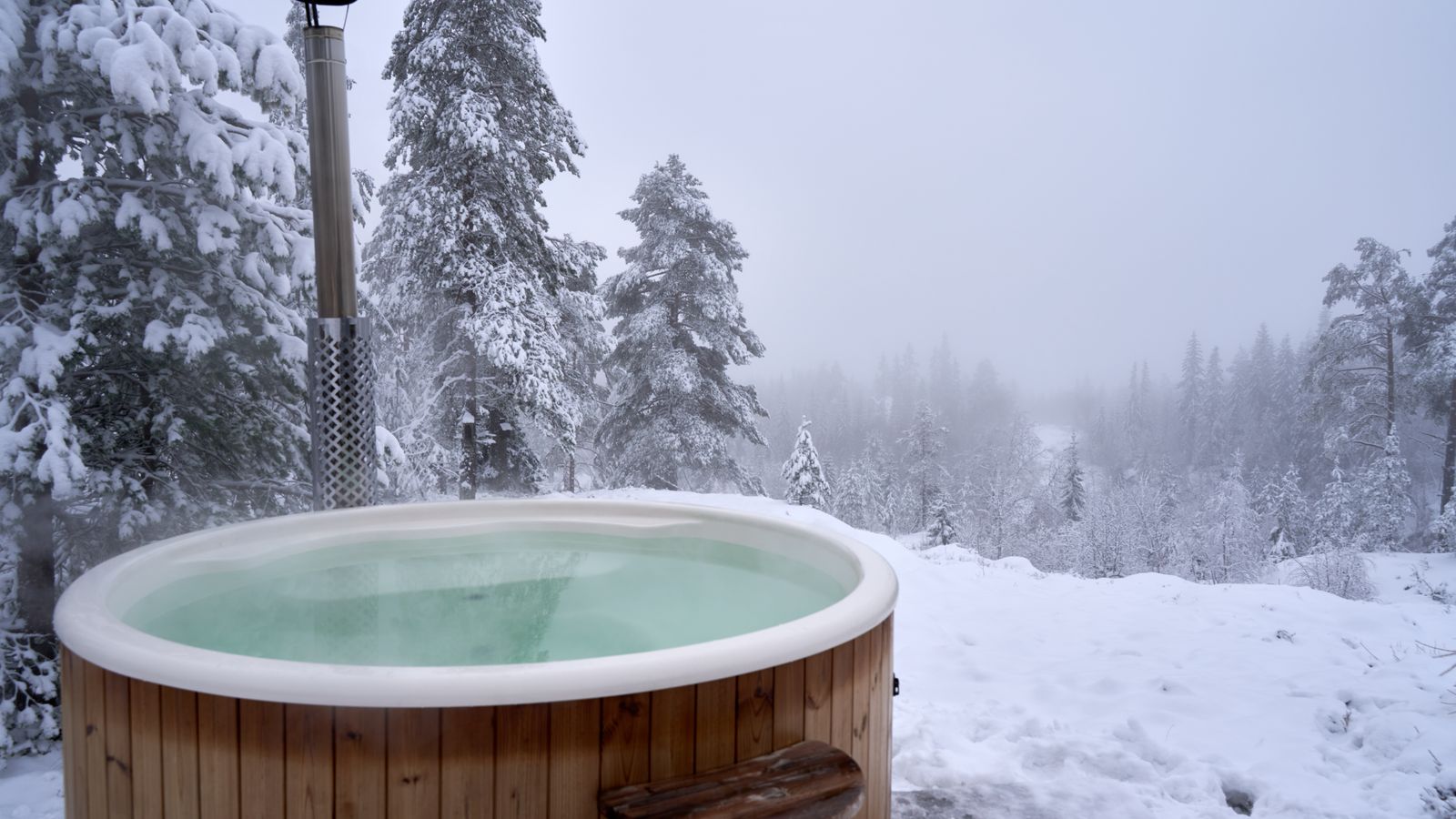
This is the shutdown manual. If you plan to run your tub through winter instead, see our inflatable hot tub winter-use guide for the full cost math.
Affiliate disclosure: As an Amazon Associate, Hot Tub Gurus earns from qualifying purchases made through links on this page — at no extra cost to you. Winterizing needs a handful of simple tools, and we only recommend the categories of gear that genuinely do the job.
How to Winterize an Inflatable Hot Tub: Drain, Dry, Deflate, Store
Most winterizing guides are written for rigid acrylic spas: loosening pump unions, blowing out jet lines with a compressor, pouring antifreeze through a filter well. Almost none of that applies to an inflatable tub. You disconnect the pump unit, drain a smaller volume, dry a liner that goes stiff in the cold, and fold a vinyl wall that cracks if forced.
This is the shutdown procedure the manufacturer should have written: inflatable-only, step by step, with the differences between Bestway and Intex drain systems and the extra work HydroJet Pro models need. Give it a dry afternoon above freezing in October or early November — before the first hard freeze — and two to three hours.
Winterize or Keep Running? (The 30-Second Decision Frame)
Winterizing is a climate and usage decision, not an obligation. Two questions decide it:
- How cold does your site get? Bestway’s manuals say not to use the spa when ambient temperature reaches −10°C (14°F); Intex’s PureSpa manuals say not to leave the spa outside below 4°C (39°F). Below your tub’s floor, the heater can’t keep up and freeze damage becomes a real risk — that’s a winterize case.
- Will you actually use it? If you’re traveling for the holidays, or you stopped soaking in December last year, the heating bill for a tub you never sit in is money burned.
On the fence? Our winter-use guide runs the actual operating-cost math. Below your tub’s temperature floor, though, the math is moot — drain and store it.
What Actually Breaks in a Freeze
Four things fail when an inflatable tub freezes:
- Pump and heater housings crack. Water trapped in the pump unit expands as it freezes, and plastic housings don’t flex. The pump is the most expensive single part of an inflatable system — a cracked housing usually means replacing the unit, not repairing it.
- Fittings and hose connections split. The small water connections between liner and pump unit, plus the filter housing and drain valve fittings, hold water you can’t see. Freeze expansion splits them at the seams.
- Hoses burst internally. Any hose left full of water becomes a row of ice plugs that can burst the wall from inside.
- Vinyl gets brittle and cracks. Cold PVC liner material loses its flexibility. Fold it while it’s cold and it creases; bump it and it can crack. This is why the “fold warm” rule later isn’t optional — Bestway’s own manuals say not to unfold or inflate below 15°C (59°F), and the same logic applies in reverse.
Everything in the procedure below is aimed at one goal: no standing water anywhere in the system, and no cold folding of the liner. Get those two right and spring-you will be grateful.
The Step-by-Step Shutdown
Do this on a day that’s comfortably above freezing — you’ll be handling a cold liner, and the folding step needs warm vinyl. Allow two to three hours; most of that is waiting for drains and drying.
Step 1: Balance and clean first
Don’t drain a grimy tub. While it’s still full and running:
- Balance the water roughly — you don’t need spa-perfect chemistry, but neutral pH and low sanitizer residue mean nothing nasty is curing in the lines while you work.
- Run the jets (and bubbles) for a few minutes with the cover off to flush loosened biofilm through the system.
- Wipe the waterline and any visible scum from the liner now, while it’s easy to reach. Anything living in the lines dries into a crust during storage and complicates your spring startup.
Step 2: Power off properly
Turn the heater and pump off at the control unit, then unplug the pump unit from the wall. Don’t just switch the panel off — a heater firing against an empty system destroys itself fast, and the Freeze Shield cycle can try to run against an empty tub. Unplugging removes the risk entirely.
Step 3: Drain fully
Every inflatable tub has a drain valve on the liner; the two big systems work slightly differently:
- Bestway (Lay-Z-Spa): open the drain valve and attach a garden hose to route water to a sewer cleanout, utility sink, or lawn (after sanitizer dissipates — never into storm drains).
- Intex (PureSpa): unscrew the drain valve cap and let gravity work, with a hose attached the same way.
Once gravity slows to a trickle, accelerate the job:
- Drop a submersible pump [AFFILIATE LINK: submersible utility pump] into the footwell to pull the last inches out fast — this turns a 45-minute wait into ten minutes.
- Vacuum the footwell with a wet/dry vac [AFFILIATE LINK: wet/dry shop vacuum] to get the last standing water, then tilt the whole liner (if you can) to chase the final puddles toward the drain.
Step 4: Purge the plumbing
An empty-looking tub still has water sitting in its air-jet lines, the water connections, and the pump unit’s internal plumbing. This is the step most owners skip — and the one that causes spring failures.
- Run the air jets briefly. With the tub drained but the liner still connected, plug the pump unit back in just long enough to run the bubble/air-jet function for 30–60 seconds. This pushes standing water out of the air lines and into the tub, where you can vacuum it up. Then unplug immediately — this is a short, supervised burst, not operation.
- HydroJet Pro models need extra attention. HydroJet-equipped Lay-Z-Spas have dedicated water-jet plumbing plus a separate 1200W jet pump (per the Hawaii owner’s manual spec table) — a whole second water circuit to clear. Run the jets until no more water mist emerges, then vacuum the footwell again. Our AirJet vs HydroJet Plus comparison explains the plumbing difference.
- Disconnect the pump unit from the liner and drain any water out of its ports by tipping it (Step 6).
- Squeeze the liner walls gently to work trapped water in the air channels toward the drain valve, and open the valve once more for the last of it.
Step 5: Remove, clean, and dry the filter
Remove the filter cartridge and set it aside — store it separately, indoors, in a dry place. Don’t leave it in the pump unit over winter; a damp cartridge in a dark pump housing grows things you don’t want to think about. Rinse it, let it dry completely, and have a spare cartridge [AFFILIATE LINK: replacement filter cartridge] ready for spring — cartridges are cheap, and starting the season with a fresh one beats resurrecting a crusty one. If your model threw flow errors in summer, check our Bestway error codes guide or the Intex PureSpa error codes guide before assuming the filter is the problem.
Step 6: Dry the pump unit
The pump/heater unit is the most freeze-vulnerable part of the whole system, and the one owners dry least carefully. With the unit disconnected from the liner, tip and tilt it in every direction over a towel or bucket to pour out water held in the housing, heater chamber, and filter receptacle. Use the wet/dry vac’s blower function through the hose ports to push out what tipping can’t reach, then leave it disconnected in a warm, dry spot with the ports open for a day so residual moisture evaporates. Check the plug, PRCD, and hose gaskets for wear while you’re at it — note anything perished for spring replacement.
Step 7: Clean and dry the liner
With the tub drained and deflated-but-not-yet-folded, wipe every interior surface with a mild cleaner, then towel-dry and air-dry — inside the air-jet ring openings and under the rim where moisture hides. Don’t forget the cover: wipe it inside and out and make sure it’s bone dry. Folding a damp liner into a bag for four months is how you discover mildew colonies in March.
Step 8: Deflate and fold — only when warm
This is where most damage happens. If the day has gone cold, move the liner indoors and let it come to room temperature — Bestway’s manuals warn against unfolding/inflating below 15°C (59°F), and the same logic applies in reverse: never fold vinyl that’s stiff to the touch. Open the air valve, press the air fully out, and fold loosely — tight, sharp creases become weak points. Keep the drain valve cap and small fittings in a labeled zip bag inside the box.
Where to Store Everything
The ideal storage spot is dry, above freezing, and ventilated:
- Best: a heated basement, utility room, or storage room, in the original box or carry bag.
- Good: an insulated garage or shed that stays above freezing — though the pump unit should come inside the house if temperatures are marginal.
- Off bare concrete. Set the box on a pallet, shelf, or cardboard; concrete wicks moisture.
- Keep accessories together: pump unit, cover, filter cartridges, inflation hose, patch kit, drain caps. Scattered parts become missing parts by spring.
No precise minimum storage temperature is stated here unless your manual gives one — the practical rule is: if the spot never frosts and stays dry, the tub is safe there.
What NOT to Do
- Don’t leave it empty and inflated outdoors. This is the worst of both worlds: no water mass to resist cold, a vinyl liner taking the full force of frost, and wind loading a structure designed to be supported by water pressure. Swim University’s winterizing guidance is blunt on this point: never leave an inflatable spa set up outdoors in freezing weather — the liner becomes brittle and can crack or tear.
- Don’t use automotive antifreeze. Ethylene glycol is highly toxic and near-impossible to fully flush from spa plumbing. Some owners and manuals mention pool/spa-grade propylene glycol antifreeze as an optional extra line of defense — but treat it as optional insurance, never a substitute for draining, and plan a full flush-out before spring.
- Don’t force a frozen cover or frozen folds. If anything is already iced, bring it inside and wait — forcing it is how cracks happen.
- Don’t power the pump dry “just to test.” The heater element and pump seals die fast without water. The pump only gets plugged in for the brief air-jet purge in Step 4, with you standing next to it.
Spring Recommissioning Checklist
Reopening is the reverse procedure with one addition: inspect before you fill.
- Inspect everything while dry. Inflate the liner indoors, in a warm room, and look for cracks, split seams, perished gaskets, or chewed hoses. Find damage now — before water is in it — not at 2 a.m. when the footwell is wet. If you find damage, check your manual and the seller about warranty coverage rather than guessing.
- Inflate warm. Same 15°C (59°F)+ rule as teardown, from the Bestway manuals: inflate indoors in a warm room, then move the liner out to its spot.
- Refill with clean water above 6°C (42.8°F) — below that, Bestway tubs throw an E03 alarm on startup.
- Fit a fresh filter cartridge and run the pump to confirm circulation before heating.
- Sanitize fresh. Start water chemistry from zero with a sanitizer and pH balance, per our beginner’s chemical guide.
- Heat gradually and watch. Check the pump unit, hose connections, and drain valve for weeping over the first heat cycle. Small drips that appeared over winter show up here, not at step one.
Frequently Asked Questions
How long does it take to winterize an inflatable hot tub?
Two to three hours for the full procedure, most of it passive (draining, air-drying). The hands-on work — purging lines, drying the pump unit, folding — is about 45 minutes.
My tub has HydroJet Pro water jets. Is there anything extra to do?
Yes. HydroJet models have dedicated water-jet plumbing and a separate 1200W jet pump beyond the standard air system, so there’s a second water circuit that must be drained, purged, and dried. Spend extra time on Step 4: run the jets until no mist or droplets emerge, vacuum the footwell again afterward, and tip the pump unit longer to clear the jet pump housing.
Can I store it in the garage instead of indoors?
An insulated garage that stays above freezing and dry is fine for the liner. The pump unit — the most expensive and freeze-sensitive part — is safer inside the house if your garage temperature is marginal. The liner only cares about cold while you’re folding it, and about frost and wind while it’s set up.
Should I put antifreeze in the lines?
It’s optional. Swim University’s winterizing guide notes that pool/spa-grade propylene glycol antifreeze is an accepted extra layer of protection, with a mandatory full flush before the tub is used again. It is never automotive antifreeze (ethylene glycol). If you drained and purged thoroughly following the steps above, antifreeze adds little — it’s insurance, not a requirement.
The Bottom Line
Winterizing an inflatable hot tub comes down to two things: get every drop of water out of the system — liner, lines, pump, fittings — and fold the liner warm. Do those, store everything dry and above freezing, and your tub will come out of winter ready for a quick recommissioning instead of an expensive repair. Skip the plumbing purge or fold a stiff liner, and spring brings the bill.
To plan the costs and timing of ownership together, see The Inflatable Hot Tub Ownership Planner: Your First Year, Planned.

4 Comments
Pingback: Reopening an Inflatable Hot Tub After Winter Storage: Step-by-Step
Pingback: Inflatable Hot Tub Losing Air and Going Soft: Causes and Fixes
Pingback: Inflatable Hot Tub in a Windy Garden: Windbreaks & Heat Loss
Pingback: Can You Use an Inflatable Hot Tub in Winter? Honest Guide