


Inflatable Hot Tub vs Hard-Shell Hot Tub: Which Should You Buy?
Disclosure: As an Amazon Associate, this site may earn from qualifying purchases made through links on this page, at no extra cost to you.
Inflatable hot tubs and hard-shell hot tubs are both hot tubs in the sense that both offer heated, circulating water to soak in. Beyond that, they are different purchases, aimed at different buyers, with different installation demands, running routines, and lengths of commitment. Choosing between them is less about which is “better” in the abstract, and more about which fits your home, your budget approach, your climate, and how certain you are that you want a permanent spa.
This guide compares the two honestly, without pretending one wins on every measure. An inflatable tub wins on entry cost, portability, and low commitment. A hard-shell tub wins on insulation, jet performance, seating comfort, and long-term durability. The right choice is the one whose strengths match what you actually need, and whose weaknesses you can live with.
The core difference: construction
An inflatable hot tub is built from flexible vinyl walls held rigid by air pressure, with a separate pump and heater unit that inflates the tub, circulates water, heats it, and drives bubble jets. You inflate it, fill it from a hose, plug it into a suitable outdoor outlet, and soak. When you no longer want it in that spot — or at all — you drain it, deflate it, and store it.
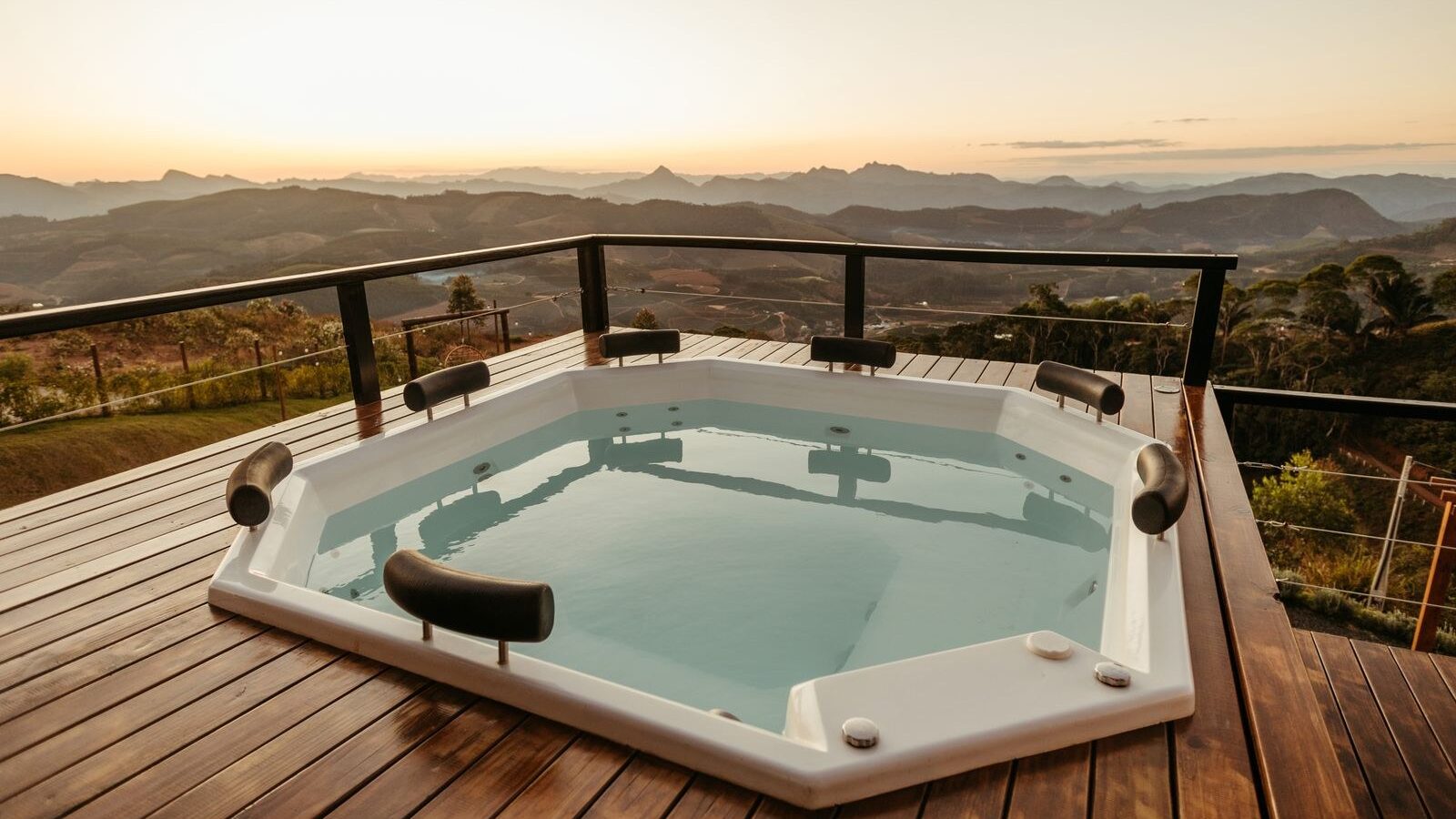
A hard-shell hot tub is built from a rigid moulded shell, usually acrylic or a similar composite, mounted in a cabinet with insulation, plumbing, and a more powerful heater and pump system. It is delivered as a large, heavy unit, needs a prepared, level base, and in many cases needs dedicated electrical work by a qualified electrician. Once installed, it stays put. That permanence is a feature if you want a lasting garden fixture, and a drawback if you rent, move often, or are not sure a spa will suit your routine.
Everything else in this comparison flows from that construction difference.
Setup and installation
Inflatable setup is a weekend-afternoon job for most owners: choose a flat, level spot, lay a ground mat if your manual recommends one, inflate, fill, balance the water, and heat. Our guide to first setup walks through the steps, and our placement guide covers ground, drainage, and access. No crane, no concrete pad, and no building work are normally required, though you still need a suitable outdoor power supply: follow your manual exactly, test the ground-fault protection before each use, and never use an extension cord unless your manual explicitly allows a specific arrangement — many manufacturers prohibit extension cords entirely, so check rather than assume. Any electrical installation work should be done by a qualified electrician.
Hard-shell installation is a project. You need a base that can support a filled spa, access for delivery, and electrical work that meets local regulations. The tub arrives, is positioned, is filled, and is commissioned, often with help from the dealer or installer. That effort pays off in a stable, insulated installation, but it also means the decision is harder to reverse. If you are renting, check your tenancy terms and landlord permission before considering either type, and see our guide to inflatable tubs in a rented home for the renter-specific questions.
Cost: entry cost versus long-term cost
Inflatable tubs cost substantially less to buy than hard-shell spas. That lower entry cost is the main reason many owners start with an inflatable: it lets you try hot tub ownership without committing to a major purchase and installation.
Hard-shell spas cost substantially more upfront, and installation adds to that. Over a long ownership period, however, the comparison narrows. A hard-shell spa is generally better insulated, so its heater works less hard to hold temperature, and its components are generally built for longer service. An inflatable tub, with thinner walls and less insulation, loses heat faster, so its heater runs more, and its flexible walls, pump, and heater are wear items that may need attention sooner. Our guide to inflatable tub lifespan explains what affects how long an inflatable lasts.
Neither picture is a reason, on its own, to choose one or the other. If you want to test whether you will actually use a spa regularly, a lower entry cost with higher relative running effort is a sensible way to find out. If you already know you will soak several times a week for years, and you have a permanent home for the spa, paying more upfront for insulation and durability can be the better long-term value. Avoid quoting a single total cost for either type without considering your climate, your electricity tariff, how often you soak, and whether you keep the cover on — all of those change the running picture more than the tub type alone.
If you are comparing specific inflatable models rather than tub types, our size comparison of four-person versus six-person inflatable tubs and our used inflatable buying checklist may help. A suitable inflatable starter option is available here: Coleman Tahiti Inflatable Hot Tub. Check the manual for power, placement, and water-care requirements before ordering.
Jets, seating, and the soak itself
This is where the difference is most obvious in use. Inflatable tubs typically use bubble jets: air blown through outlets in the floor and walls, creating a bubbling, effervescent soak. It is relaxing, and many owners enjoy it, but it is not targeted massage. Some inflatable models add water jets as well, but they do not generally match the directed, adjustable hydrotherapy jets of a hard-shell spa.
Hard-shell spas are built around seating and jets. Moulded seats position bathers at different depths, and directional jets target shoulders, back, and legs with adjustable pressure. If your main goal is a warm soak with friends or family, bubbles may be entirely sufficient. If your main goal is targeted jet massage — for example, after exercise or for persistent muscle tension — a hard-shell spa is the stronger choice, and an inflatable tub may disappoint. For health-related goals, speak to a healthcare provider about what is appropriate for you, rather than relying on a tub description.
Seating comfort follows the same pattern. An inflatable tub has a flat floor and flexible walls; you sit on the floor or on an inflatable cushion, and depth is the same wherever you sit. A hard-shell spa has varied seat heights, footwells, and armrests designed for longer soaks. Neither is universally more comfortable — some people prefer the open, social layout of a round inflatable tub — but the hard-shell design gives more options for different body sizes and soak positions.
Insulation, heating, and cold climates
Insulation is the hard-shell spa’s clearest practical advantage. A rigid, foam-insulated shell and a well-fitted, insulated cover hold heat far better than thin vinyl walls and a lighter cover. In mild weather, the difference is modest. In cold weather, it becomes significant: an inflatable tub takes longer to heat, loses heat faster between soaks, and its heater works harder to maintain temperature.
That does not rule out inflatable tubs in cold climates, but it does mean cold-climate inflatable owners need to be realistic and prepared: keep the cover on whenever the tub is not in use, consider wind shelter and insulation underneath and around the tub where the manual allows, avoid letting a full tub sit unheated in freezing weather, and expect slower heating. Our guide to buying an inflatable tub for cold climates covers those preparations in detail. If you want reliable year-round soaking in a cold climate with minimal heating effort, a hard-shell spa is the more straightforward choice.
Maintenance and water care
Water care principles are the same for both types: sanitise, balance pH, filter, shock after heavy use, and change the water on a sensible rhythm. Our beginners guide to hot tub chemicals applies to both. The difference is scale and margin for error.
An inflatable tub holds less water, so mistakes show faster. A dose meant for a larger spa can overshoot in a small inflatable tub, sanitiser is used up faster in warm, heavily used water, and a clogged filter affects a small system quickly. Hard-shell spas hold more water, filter more powerfully, and often include additional water-care systems, which gives them a wider margin — but they still need regular testing, filter care, and water changes, and their plumbing is more complex to clean if neglected.
In practical terms, inflatable ownership demands a more hands-on, frequent routine, while hard-shell ownership demands a less frequent but sometimes more involved routine, including care of the shell, cover, and more complex equipment. Neither is maintenance-free, and anyone selling either type as maintenance-free is oversimplifying.
Portability, space, and commitment
Portability is the inflatable tub’s second great strength after entry cost. You can move it within the garden, take it with you when you move house, deflate it for winter storage, or lend the space to something else for a season. That flexibility suits renters, people who move for work, people with small gardens who need the space for other uses, and people who are not yet sure a spa will become a habit.
A hard-shell spa is a commitment to a place. It needs a permanent spot, it changes the garden, and removing it later is a project in itself. That commitment is worth it if you are settled, you have the space, and you want a lasting feature. It is a poor fit if you may move within a year or two, if your landlord restricts permanent installations, or if you simply want to try the idea first.
Space also differs in shape. Inflatable tubs are available in round and square forms that fit different gardens and corners, while hard-shell spas come in a wider range of shapes and sizes, including larger models that seat more people comfortably. Measure your space, allow access around the tub for maintenance and cover handling, and remember that a filled spa is heavy: the ground beneath either type must be level and capable of supporting it, as our placement guide explains.
Indoor and garage siting
Indoor siting deserves a separate mention, because it is sometimes proposed as a way around weather and privacy. An inflatable tub indoors raises humidity, drainage, floor-loading, and ventilation questions that need careful thought, and a hard-shell spa indoors raises the same questions at larger scale, plus delivery access through doors and corridors. Our guide to indoors and garage siting for inflatable tubs covers the inflatable-specific issues. For either type, get professional advice on floor loading, drainage, and ventilation before committing to an indoor installation, and never assume a standard room floor is suitable for a filled spa.
Who should choose which?
Choose an inflatable tub if: you want to try hot tub ownership without a major commitment; you rent or move regularly; your garden space is limited or multi-use; you want a seasonal soak rather than a permanent fixture; or your budget approach favours a lower entry cost while you learn whether you will use a spa enough to justify more.
Choose a hard-shell spa if: you know you will soak regularly for years; you have a permanent home and a suitable base and power supply; you want targeted jet massage and varied seating; you live in a cold climate and want efficient year-round heating; or you want a long-lasting garden fixture and are prepared for the installation project and higher upfront cost.
Consider a middle path if: you are torn. A quality used hard-shell spa, inspected carefully, can offer hard-shell performance at a lower entry cost than a new one, though it brings its own inspection and repair questions. Alternatively, starting with an inflatable tub for a season or two, then upgrading if the habit sticks, is a common and sensible route — the inflatable period teaches you how often you soak, what size you need, and whether jets or simple bubbles satisfy you, all of which make the hard-shell choice easier later.
Frequently asked questions
Is an inflatable hot tub a real hot tub?
Yes, in the sense that it provides heated, circulating, sanitised water for soaking. It differs from a hard-shell spa in jets, insulation, seating, and durability, but for many owners the soak itself is exactly what they wanted.
Will I regret buying an inflatable first?
Not usually, if you buy it for the right reasons: trying ownership, fitting a rental or small garden, or soaking seasonally. Regret usually comes from expecting hard-shell jet massage or cold-climate efficiency from an inflatable tub, which it is not designed to deliver.
Can an inflatable tub be used all year?
It can, with preparation, especially in mild climates. In cold climates, expect slower heating, higher heater workload, and the need for careful cover and freeze precautions. A hard-shell spa handles year-round use more easily.
Do both types need the same water care?
The principles are the same — sanitiser, balance, filtration, and water changes — but an inflatable tub’s smaller water volume means testing and dosing need more care and frequency. Always follow your tub manual and product instructions for your specific model.
The honest summary is this: inflatable tubs are the low-commitment way into hot tub ownership, and hard-shell spas are the long-term, high-performance way to stay in it. Match the tub to your home, your climate, your soaking goals, and your willingness to commit, and either choice can be the right one.
Related guides
- 4-Person vs 6-Person Inflatable Hot Tub: Which Size Do You Actually Need?
- Buying a Used Inflatable Hot Tub? Inspect It Before You Pay
- Buying an Inflatable Hot Tub for Cold Climates: Freeze Protection, Insulation, and Heater Features
- Where to Put an Inflatable Hot Tub: Deck Weight Limits, Ground Prep, and Siting
- How Long Do Inflatable Hot Tubs Last? (Real Lifespan by Brand, Care, and Failure Mode)
- New Inflatable Hot Tub? The First-Fill Setup Walkthrough
- Inflatable Hot Tub Indoors or in a Garage? Moisture, Drainage, and Floor Checks
- Inflatable Hot Tub in a Rented Home: Permissions, Surface Protection, and Moving Out
- Hot Tub Chemicals for Beginners: What You Actually Need and What to Ignore
- Energy-Efficient Inflatable Hot Tubs: Insulation, Covers and the Habits That Cut Running Costs
- Inflatable Hot Tub and Solar Panels: What Solar Can and Cannot Do for Heating Costs
- Intex vs Bestway vs Coleman Inflatable Hot Tubs: The Three-Brand Comparison


3 Comments
Pingback: Hot Tub With Seats vs Without: Benches, Loungers & Space
Pingback: Intex vs Bestway vs Coleman Hot Tubs: 3-Brand Comparison
Pingback: Energy-Efficient Inflatable Hot Tubs: Insulation & Habits