


Draining an Inflatable Hot Tub: Hose, Pump, and Where the Water May Legally Go
Disclosure: As an Amazon Associate, we earn from qualifying purchases.
Every guide on this site tells you when to change the water. Our when-to-change-water guide owns timing, and it notes — correctly — that drainage legality varies by locality. This guide owns the method: how the water actually leaves the tub, what tools you need, what to do with the last stubborn litres, and how to refill. It does not own timing, and it does not give you a universal permission for where the water may go, because there is not one. That question is answered locally, and the last section explains how to answer it.
Before you drain: the three checks
- Power off, correctly. Switch the heater and pump off per your manual before draining begins, and do not run the pump dry — a pump run without water damages itself quickly. The drain procedure starts with the electrics safe, not with the hose.
- Water condition. If the water is heavily chemically treated, very recently shocked, or green and untreated, it is not the same as balanced, aged water for disposal purposes — another reason the disposal question needs a local answer, not a guess. Let recently shocked water age and test back toward normal ranges before draining, unless your local rules say otherwise.
- Where the water will go, decided before the hose is connected. Work out the route and the destination before you start, not while hundreds of litres are flowing. See the last section.
Method 1: gravity hose (slow, simple, free)
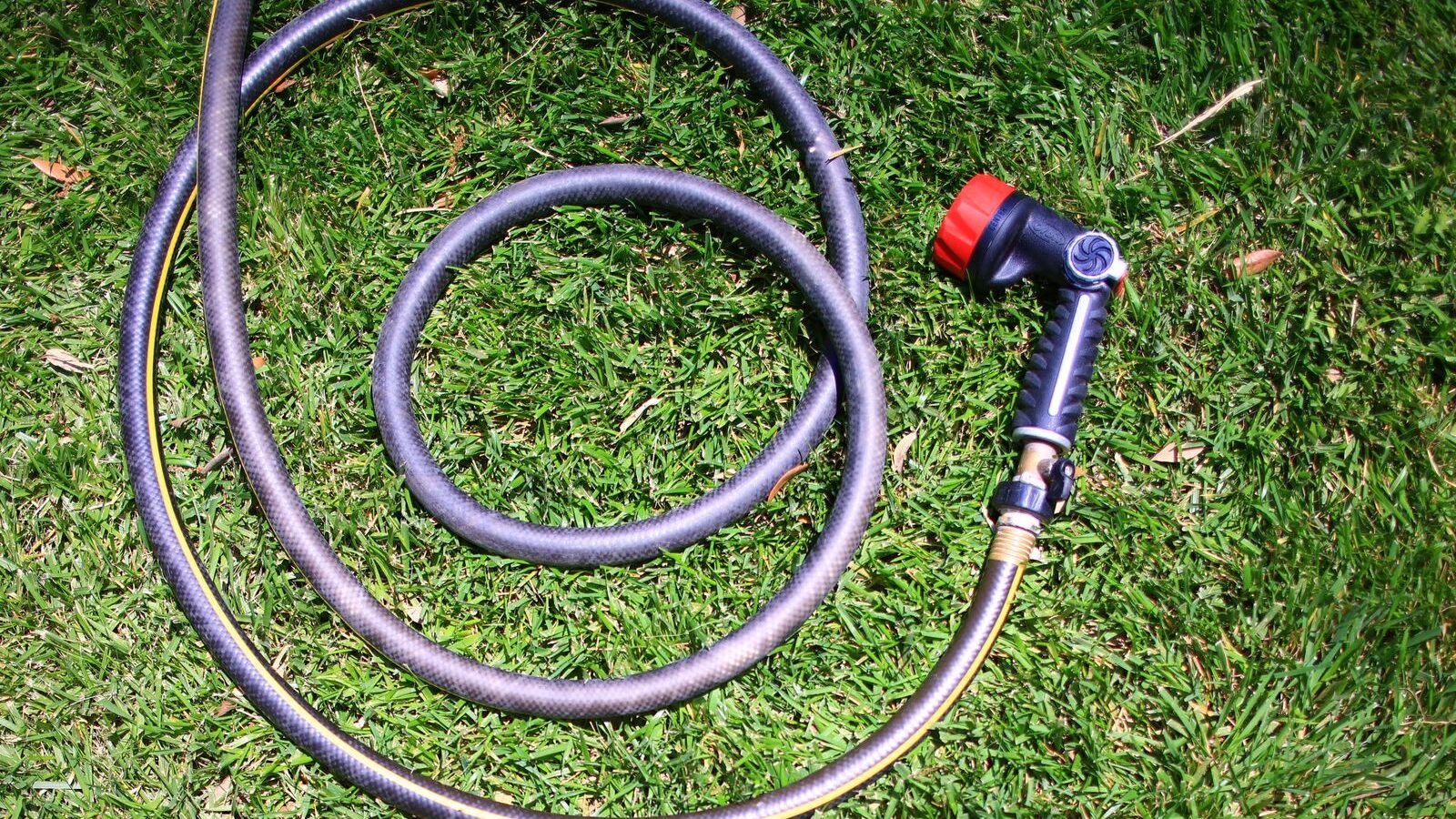
Most inflatable tubs have a drain valve designed for a garden hose connection. Attach the hose, route it to your chosen destination, open the valve, and let gravity do the work. Gravity draining is slow — expect a long wait for a full tub — and it stops working when the water level falls to the level of the hose outlet, leaving residual water in the bottom. Its advantages are simplicity and zero equipment cost: [AFFILIATE LINK: garden hose for draining]. Its limits are speed, the need for a downhill route (a hose cannot drain uphill), and the residual water problem below.
Method 2: submersible pump (fast, thorough, worth owning)
A submersible drain pump, placed in the tub and discharging through a hose to your destination, drains far faster than gravity and gets the level much lower. For owners who drain several times a year, it is the tool that turns a half-day chore into an hour’s job: submersible drain pump Use it per its own instructions — rated for the water, hose routed safely (no trip hazards, no discharge onto a neighbour’s property or a public path), and never left running dry. Even a pump leaves some residual water; the last centimetres are a manual job in either method.
The residual water, and why it matters
However you drain, water remains: in the bottom of the tub, in the lines, and in the pump. Remove the bulk by hand (a scoop, a sponge, or a wet vacuum if you have one), and then deal with the lines: your manual’s drain procedure covers clearing lines and pump water, and for winter shutdown this step is critical — trapped water left in lines can freeze, expand, and crack fittings, which is why winterising insists on it. For a routine water change in mild weather, clearing the lines is still worth doing: stale water left in lines becomes the first contamination of your fresh fill. If you are draining in order to deep-clean, the empty tub is the opportunity — the deep-clean guide covers shell, jets, and lines on drain-down.
Refill sequence
Refill per your model’s own procedure — fill method and connection order differ by brand, and this article does not publish a universal step-by-step for all brands. The general shape, confirmed against the first-setup and recommissioning routines, is: clean and inspect while empty, refill to the marked level, run the pump and check for leaks at every union, fit a fresh or cleaned filter, and rebalance from scratch in the standard order (alkalinity, then pH, then sanitiser) against the CDC ranges — free chlorine at least 3 ppm, pH 7.0–7.8. Heat with the cover on, and confirm the water holds temperature and sanitiser before anyone soaks. A refill is a fresh fill, and it deserves the fresh-fill discipline, not a shortcut.
Where the water may go: the local question
Here is the part no article can answer for you, and any article that pretends to is guessing. Drainage rules vary by locality, water authority, and property type: some areas allow discharge to a garden or lawn, some require a foul drain, some restrict discharge to storm drains or watercourses because treated spa water contains sanitiser and chemicals that storm systems are not designed for, and some properties (rented homes, shared spaces, homes with septic systems) have additional constraints from leases or the property’s own system. Homeowners’ association or tenancy rules may add another layer.
So the procedure is: check your local water authority’s guidance, check any lease, HOA, or tenancy terms that apply to your property, and check whether your property is on a septic system (in which case large chlorinated discharges need specific advice, not a guess). Never discharge onto a neighbour’s land, a public path, or a watercourse on the assumption that it is allowed. If you cannot establish a lawful destination, the safe default is a foul drain connection via a hose route you have verified, or advice from your water authority — not the nearest patch of grass.
Plan the drain route when you site the tub, not on drain day: the placement guide covers drainage siting for exactly this reason. A tub sited with a drain route in mind drains in an hour; a tub sited without one drains into a problem.
Related guides: Reopening Your Inflatable Hot Tub After Winter Storage: Inspect, Clean, Refill, Rebalance; Green Hot Tub Water? The Algae Recovery Sequence, Step by Step; Deep-Cleaning Your Inflatable Hot Tub at Water Change: Shell, Jets, and Lines.


7 Comments
Pingback: Hot Tub Chemicals for Beginners: What to Buy & Skip
Pingback: Inflatable Hot Tub in a Rented Home: Permissions, Protection & Moving Out
Pingback: Inflatable Hot Tub Foamy Water: Causes and How to Fix It
Pingback: Filling a Hot Tub Without an Outdoor Tap: Hoses & Adapters
Pingback: Inflatable Hot Tub Pre-Delivery Checklist: Be Ready First
Pingback: Inflatable Hot Tub for a Holiday Let: Guest Rules & Cleaning
Pingback: Deep-Cleaning an Inflatable Hot Tub at Water Change: Shell, Jets & Lines